Moving to the Dominican Republic from the U.S. or Canada takes a few clear steps. First, enter legally and choose a residency route. Then plan what you bring, and sort out banking, health insurance and driving. Rules change, so this checklist links each step to an official source you can check before you pay anything.
Step 1: How long can you stay as a tourist?
Most people start with a visit, and the rules depend on your passport. Canadians can read the Government of Canada’s travel advice, updated on 26 May 2026. It says Canadians need no tourist visa for stays of up to 30 days. You can also apply for an extension of up to 120 days at the Dirección General de Migración in Santo Domingo. Apply after you arrive and before your tourist card expires. Overstaying can lead to deportation or a refused re-entry.
The same page lists a few entry formalities:
- E-Ticket: an electronic entry and exit form you complete before boarding, once per trip.
- Tourist card: if you fly in, your airline ticket already includes its cost.
- Passport: until 31 December 2026, Canadian tourists only need a passport that lasts for their whole stay. For other purposes, it needs six months of validity after arrival.
- Proof at the border: officers may ask for proof of funds, your address and a return or onward ticket.
For U.S. citizens, the picture is less clear here. We could not open the State Department’s country page or the Dirección General de Migración website on 26 October 2026. Therefore, we do not quote a length of stay for U.S. passports here. Instead, verify it on travel.state.gov and with the Dirección General de Migración (migracion.gob.do) before you travel.
Step 2: Which residency options exist?
A tourist stay is not residency. If you plan to live in the country, the route usually starts with a residence visa issued abroad. The Ministry of Foreign Affairs (MIREX) visa page describes the residence visa (RS) for people who want to settle. It lists these grounds:
| Residence ground (MIREX) | Key requirement stated |
|---|---|
| Family ties | Marriage or direct dependency, with legalized civil records |
| Investor (Law 171-07) | An investor certificate from the body MIREX names for each type of investment |
| Pensioner or retiree (Law 171-07) | Minimum pension income of US$1,500 a month, plus US$250 per dependent |
| Rentista, income from investments (Law 171-07) | Minimum income of US$2,000 a month, plus US$250 per dependent; salaries do not count |
According to MIREX, you can use the RS visa for 60 days and for one entry only. Then, once in the country, you have 30 days to visit the Dirección General de Migración. There you start temporary residency and complete its extra requirements. Typical documents include a criminal record certificate from each country where you lived in the last five years. MIREX also asks for a legalized or apostilled birth certificate and three months of bank statements.
Two warnings from the same page are worth repeating. First, meeting every requirement does not mean approval, since the Ministry makes the final decision. Second, MIREX advises against buying non-refundable tickets until you have the visa. In short, nobody can promise a residency outcome. A local immigration lawyer can tell you which route fits your case.
Step 3: What can you bring with you?
Customs rules come from the Dirección General de Aduanas (DGA). Its traveler’s guide lists what each passenger can bring without paying duties:
- Personal items such as clothing, shoes, toiletries and books, in reasonable amounts.
- One laptop and one tablet, new or used. A second laptop pays duties.
- Gifts up to a total of US$500, a benefit you can use once every three months.
- Up to 5 liters of alcoholic drinks for adult passengers.
- Personal medicines; for controlled substances, carry the prescription.
Customs does not tax cash. However, you must declare US$10,000 or more, or the equivalent in other currencies or bearer instruments, when you enter or leave. Carry documents that show where the money came from. You must also declare food, plants and animal products.
A full household move is a different matter. The traveler’s guide does not cover shipping furniture or a container. Before you pack, ask the DGA or a licensed customs broker what applies to your shipment. If you buy a furnished home, you may need to ship far less.
Step 4: How should you handle money and banking?
The local currency is the Dominican peso (DOP). The Government of Canada advises using ATMs inside banks or businesses. It also suggests checking your statements, since card skimming is a common scam. Banks set their own requirements for opening an account, so ask your chosen bank for its list before you arrive.
Taxes follow you, too. The U.S. Embassy’s American Citizens Services page has a reminder on this point. U.S. citizens and green card holders must still file federal income tax returns while abroad. It also notes a Social Security Federal Benefits Unit at the Embassy in Santo Domingo, which works by appointment. Canadians should likewise check their own filing duties. In any case, speak with a tax adviser in both countries before you change your tax residence.
If you plan to finance a purchase, read our Spanish guide on mortgages for buyers living abroad. It explains what local banks usually ask for.
Step 5: How do you arrange health insurance?
Health cover deserves early attention. The Canadian advice says good medical care is generally available only in major cities, and quality varies. It also warns that private hospitals may require payment and proof of insurance before treatment. For that reason, it recommends insurance that covers hospital stays and medical evacuation.
Your home plan may not cover you abroad for long, so ask your insurer first. Then get written quotes from insurers licensed in the Dominican Republic. Also check which clinics in your area accept each plan. Our guide to the cost of living in Puerto Plata explains why it belongs in your budget early.

Step 6: Can you drive with your home license?
Canada’s advice says you can drive with a Canadian license for up to 30 days. You must also carry an International Driving Permit. For U.S. license holders, we could not confirm the rule on an official page. Therefore, check the State Department’s country information before you drive.
The same Canadian page describes road conditions plainly. Major highways are generally in good condition, while many rural roads lack upkeep. Hazards include unmarked speed bumps, potholes, livestock and poor lighting. As a result, many newcomers prefer not to drive at night at first.
Step 7: Where will you live?
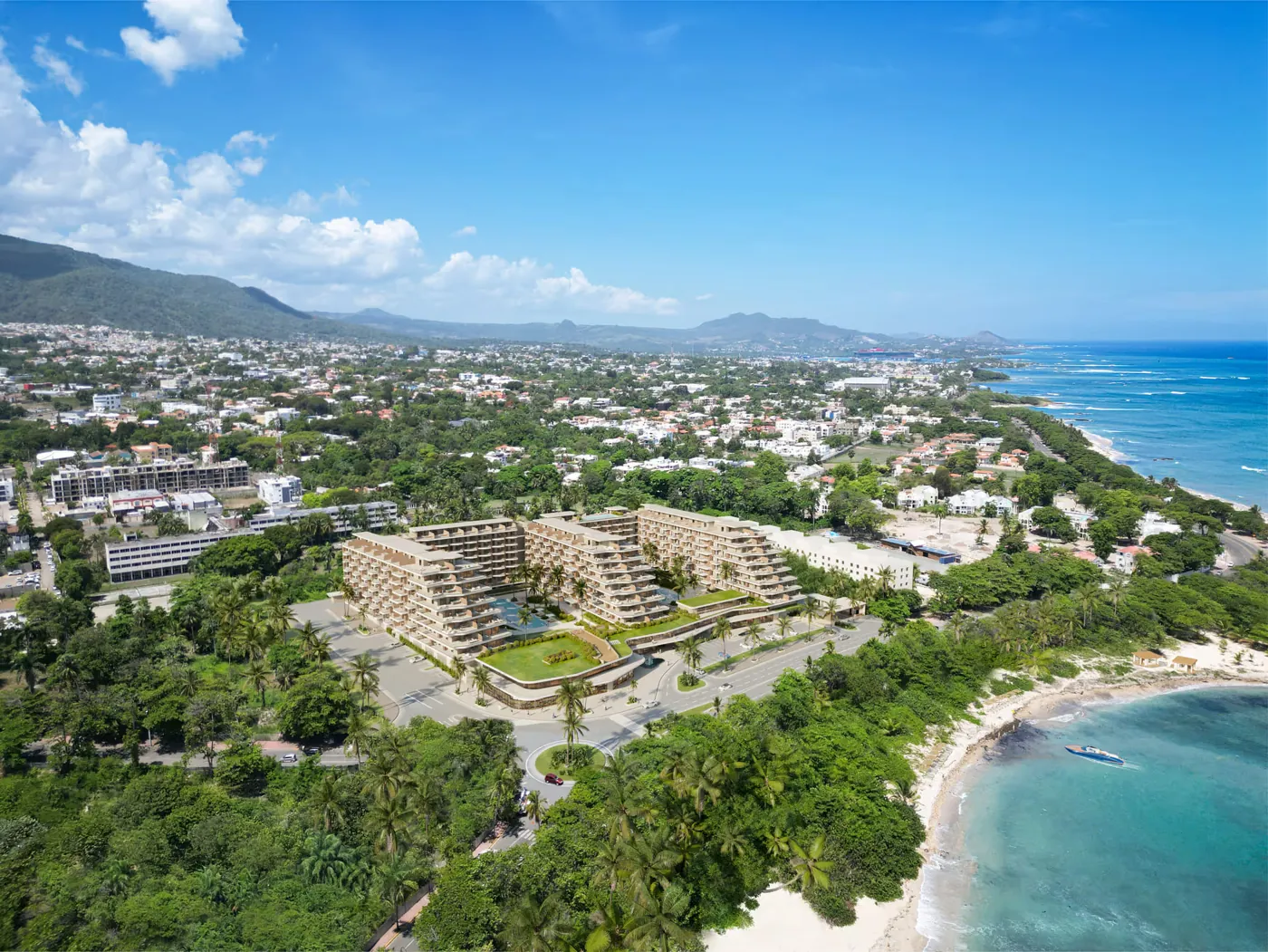
Many people rent first, then buy once they know the area. Others prefer to arrive with a home ready. At Long Beach Puerto Plata, the developer delivers apartments furnished. That includes curtains, bed and bath linens, kitchen appliances, air conditioning and televisions. The project sits on the Malecón, about 20 minutes from Gregorio Luperón International Airport.
Prices start from US$171,985 (prices and availability subject to change). The payment plan starts with a US$5,000 reservation and 20% down, which you can split into two payments. Next come 40% during construction and 40% on delivery. Construction should start in February or March 2027 (estimated), and first-stage delivery is planned for March 2030 (estimated). Note that buying a property does not by itself give you residency. See the apartment types for layouts.

Your checklist for moving to the Dominican Republic
Here is the whole process in one table, with the place to confirm each step:
| Step | What to do | Where to verify |
|---|---|---|
| 1. Entry | Check visa rules, E-Ticket and length of stay | Dirección General de Migración; travel.gc.ca; travel.state.gov |
| 2. Residency | Pick a route and gather apostilled documents | MIREX and the Dominican consulate near you |
| 3. Belongings | List what you bring; ask about household shipments | Dirección General de Aduanas |
| 4. Money | Plan banking and tax filing in both countries | Your bank; a tax adviser; U.S. Embassy |
| 5. Health | Get written insurance quotes and check local clinics | Licensed insurers |
| 6. Driving | Carry the required permit and learn the roads | travel.gc.ca; travel.state.gov |
| 7. Housing | Rent or buy with written contracts | An independent lawyer in the country |
To sum up, moving to the Dominican Republic is manageable one step at a time, if you confirm each rule at its source. Nothing here guarantees a residency or tax result, so lean on a local lawyer and a tax adviser. If Puerto Plata is on your list, contact the Long Beach sales team to plan a visit.
Frequently asked questions
How long can a Canadian stay in the Dominican Republic as a tourist?
The Government of Canada says no tourist visa is needed for stays of up to 30 days, and that you can apply for an extension of up to 120 days at the Dirección General de Migración before your tourist card expires. Check the page again before you travel.
How long can a U.S. citizen stay as a tourist?
We could not open an official U.S. or Dominican page stating the figure when we checked, so we do not quote one. Verify it on travel.state.gov and with the Dirección General de Migración before you travel, because overstaying can bring penalties.
What income do I need for retiree residency?
The MIREX visa page lists a minimum pension of US$1,500 a month for a pensioner residence visa and US$2,000 a month for a rentista, plus US$250 per dependent. Meeting the requirements does not guarantee approval, so speak with an immigration lawyer.
Does buying property give me residency?
Not by itself. Residency follows the routes set by MIREX and the Dirección General de Migración, such as family ties, investment under Law 171-07, a pension or rentista income. Ask an immigration lawyer which route fits your situation before you rely on any of them.
Do I have to declare cash when I arrive?
Yes, if you carry US$10,000 or more, or the equivalent in other currencies or bearer instruments. The Dirección General de Aduanas says cash is not taxed, but you must declare it on entry or exit and carry documents showing its lawful origin.
Can I drive with my Canadian license?
The Government of Canada says you can drive with a Canadian license for up to 30 days, but you must also carry an International Driving Permit. U.S. license holders should confirm the current rule on the State Department's country page.
Información general con fines orientativos. Consulta a un asesor legal o fiscal antes de tomar decisiones.